
Cash Flow Velocity: Liquidity as a Strategic Weapon
The Core Thesis
Revenue is a vanity metric. Profit is a requirement. But cash flow is the only measure of speed.
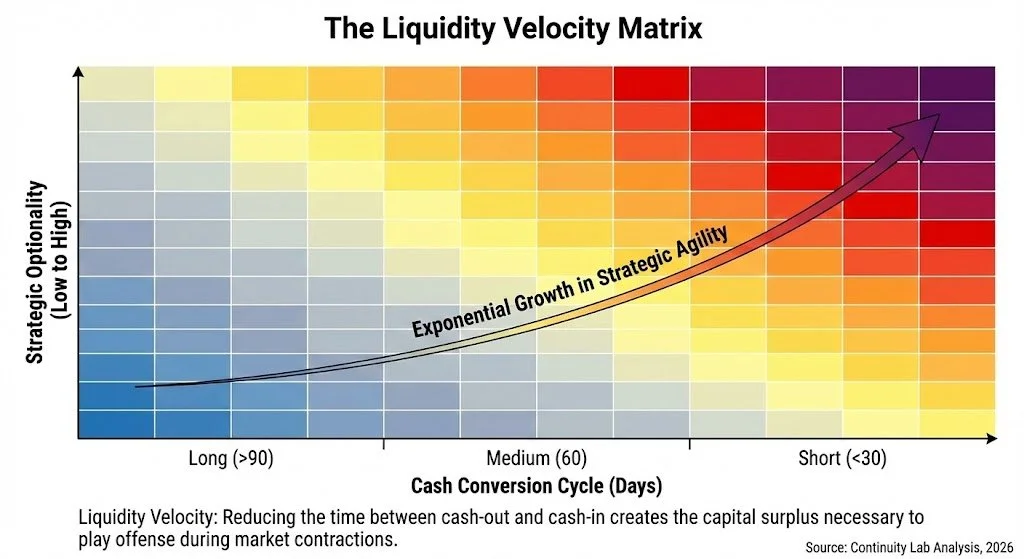
Many SME executives treat their balance sheets as a storage room rather than a propulsion system. They focus on EBITDA while ignoring the widening gap in their cash conversion cycle. This is a structural blind spot. In 2026, liquidity is the difference between a business that pivots and one that paralyzes.
We are entering a period of "Working Capital Headroom" as a primary competitive differentiator. As global credit conditions tighten and the 2026–2027 corporate refinancing wall approaches, the cost of liquidity is rising. If your cash is trapped in slow-moving inventory or uncollected receivables, your ability to respond to market volatility is zero. You are not "stable"; you are stationary.
The 2026 Liquidity Crisis
The current fiscal landscape does not reward "safe" cash management. It rewards active liquidity. Data from early 2026 indicates that mid-market firms with a "Time to Survive" (TTS) of less than 90 days are 3x more likely to face insolvency during a minor supply chain disruption.
The Refinancing Trap: $11 trillion in floating-rate debt is currently impacting corporate margins. Businesses without cash reserves are being forced into predatory lending cycles just to maintain operations.
Receivable Friction: Payment terms are stretching. Large caps are pushing SME suppliers to 90 or 120-day terms to preserve their own liquidity. Without a "Working Capital Headroom" strategy, you are effectively financing your customers' growth at the expense of your own.
The Opportunity Gap: Market volatility creates price dislocations. When a competitor fails or a supplier offers a deep discount for immediate payment, only the liquid can execute.
The Diagnostic Framework
To shift from a fragile to an agile cash position, you must move beyond the standard monthly statement. You need real-time visibility into these three metrics:
Liquidity Burn Rate (Stressed): What is your daily cash outflow if revenue drops by 40%?
Concentration of Receivables: What percentage of your cash flow is tied to a single customer's accounts payable department?
Refinancing Exposure: When does your debt mature, and what is the "rate-shock" impact on your P&L at current 2026 yields?
Stop viewing cash as a safety net. Start viewing it as the fuel for your next move.
Audit Your Liquidity Before the Market Does.
Is your cash trapped or is it working? Use the Continuity Advisor tool to run a liquidity stress test on your current operations. Identify your "Time to Survive" and secure your working capital headroom.